Strategy Workspace BR60_03
Loaded
Ask Starling anything...
The Breakthrough

Your business,
fluent in AI

That’s not a mockup. It’s how work happens inside Starling — with your AI loading the right context for every session.

Request a Demo


What Starling Solves

Business has never had canon.

Your AI doesn’t fail because it isn’t smart enough. It fails because nothing in your system designates what’s authoritative. Ten documents discuss competitive positioning — which one governs? Three departments define “customer success” differently — which definition wins? Without canon, AI guesses. With canon, it reads the governing truth by name.

Canon requires three things:

Authority icon
Authority

Someone designates which version governs. Not by committee — by designation. That’s the System Librarian role.

Addressability icon
Addressability

Permanent coordinates that don’t break. MA20 means Competitive Position everywhere — for everybody.

Accessibility icon
Accessibility

One truth, multiple readers. Humans read the document. Machines parse the address. Same knowledge, no translation.

The Product

One AI. Four ways to show up.

Starling’s four operating modes reason from the same organizational memory, but show up differently depending on where you are in the work. As your memory grows, more modes activate.

Builder icon
Builder

Starts with you at zero.

Warm, encouraging, practical. Walks you through fifteen conversations that produce permanent organizational memory. Builder runs during onboarding and steps aside once your First Fifteen are canonized.

Chief of Staff icon
Chief of Staff

Activates at 15/15.

Strategic, proactive, executive. Runs on the organizational side of your memory — brand, market, innovation, values, strategy, active campaigns. Your AI executive partner reasoning from your own organization’s intelligence.

Personal Coach icon
Personal Coach

Activates in My Library.

Personal, reflective, attentive. Runs on the individual side of your memory — energy, finance, relationships, flow, self-development. Toggles with Chief of Staff in the same AI panel — same Starling, different context.

Steward icon
Steward

Runs continuously.

Diligent, vigilant, quiet. Scans your Org Brain daily to validate structure, detect drift, and check integrity. Surfaces a daily brief of items needing the System Librarian’s judgment — so the canon stays clean while you focus elsewhere.

Most AI products ask you to trust a generic assistant. Starling asks you to build memory, then becomes a partner that reasons from it.

The Domain Language Model

The know-how is the asset. The processing is the commodity.

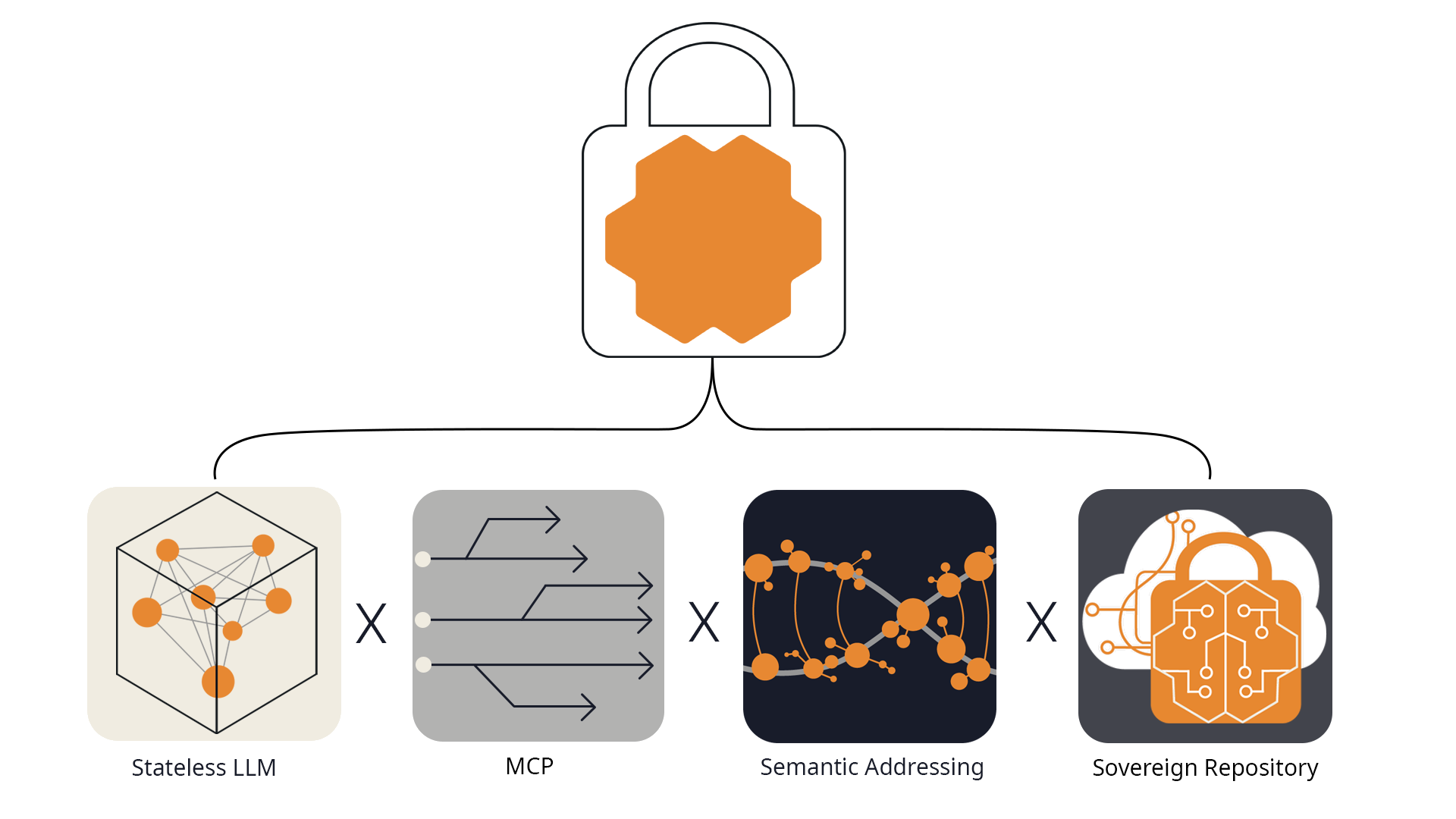
A Domain Language Model isn’t a fine-tuned model. It’s a general-purpose LLM that reads your canon through a stateless bridge and forgets after every session. The LLM doesn’t get smarter — your domain does.

Domain Language Model equation: Stateless LLM × MCP × UCA × Org Brain = DLM
LLM
Large Language Model

The reasoning engine. Powerful, interchangeable, not yours. When a better model ships, you switch. Nothing breaks.

The Commodity
MCP
Model Context Protocol

The connection standard. Anthropic’s open protocol for connecting AI to external data. Session-based — when it ends, the AI forgets.

Free Standard
UCA
Semantic Addressing

The map. Permanent coordinates for organizational knowledge. MA20 means Competitive Position everywhere, for every system.

Free Standard
Org Brain
Sovereign Repository

The memory. Your canon, your infrastructure, your compounding intelligence asset. The AI reads and writes to it, then forgets. You remember.

You Own This
Free Standards

Two of the four factors are free, open standards. The third is a commodity. The fourth — the Org Brain — is yours. That’s information sovereignty.

Why Now

The architecture window is closing.

Every AI platform asks for your data. Once it’s in their training pipeline, it’s gone. UCA keeps your knowledge on your infrastructure — the AI reads it, advises, and forgets. This decision won’t wait.

Request a Demo Get the Free AI Guide